
Laboratory Research
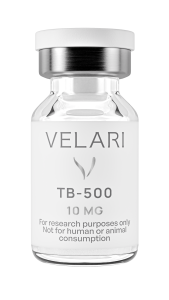
Current studies examine how TB-500 interacts with biological processes associated with tissue repair, inflammation, and blood vessel formation, aiming to map cellular processes and understand its potential applications in lab research.
Role of TB-500 in Tissue Repair
TB-500 is associated with cellular movement toward damaged tissue and with biological processes involved in tissue rebuilding, including muscle, tendon, and ligament structures. It is also linked to pathways involved in blood vessel formation during tissue repair.

Role of TB-500 in Inflammation
Laboratory research on TB-500 focuses on cellular pathways and processes related to reducing swelling and supporting the repair of inflamed tissues. It is studied to characterize its effects on inflammatory pathways and subsequent tissue repair dynamics in controlled laboratory settings.

Role of TB-500 in Blood Vessel Growth
TB-500 is associated with biological processes involved in the formation of new blood vessels and the organization of vascular networks. Researchers study it to understand how it may improve blood flow and tissue repair in laboratory models.

Hair Growth & Skin Healing
Laboratory research has examined thymosin beta-4–related peptides in the context of skin and hair follicle biology. Studies report observations such as changes in cellular migration, angiogenesis, and tissue remodeling in skin models. Hair follicle activity has been explored, but findings are limited to experimental settings and have not been tested for clinical use.

REFERENCES
- Van Troys, M., Dewitte, D., Goethals, M., Carlier, M. F., Vandekerckhove, J., & Ampe, C. (1996). The actin binding site of thymosin beta 4 mapped by mutational analysis. The EMBO Journal, 15(2), 201–210.
- Xing, Y., Ye, Y., Zuo, H., & Li, Y. (2021). Progress on the function and application of thymosin β4. Frontiers in Endocrinology, 12, Article 767785.
- Kim, S., & Kwon, J. (2014). Thymosin beta4 improves dermal burn wound healing via downregulation of receptor of advanced glycation end products in db/db mice. Biochimica et Biophysica Acta (BBA) — Molecular Basis of Disease, 1840(12), 3452–3459.
Research Context
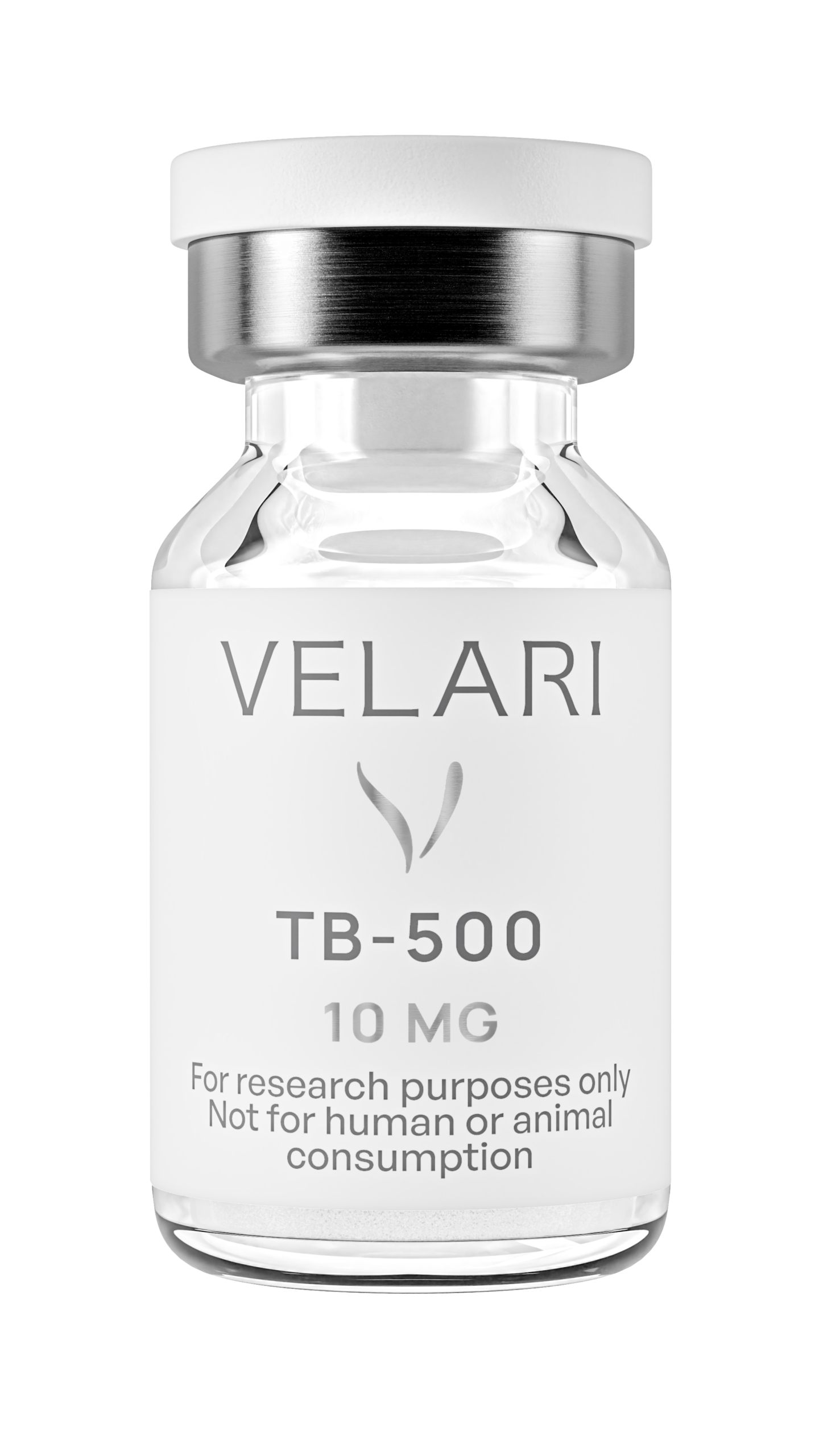
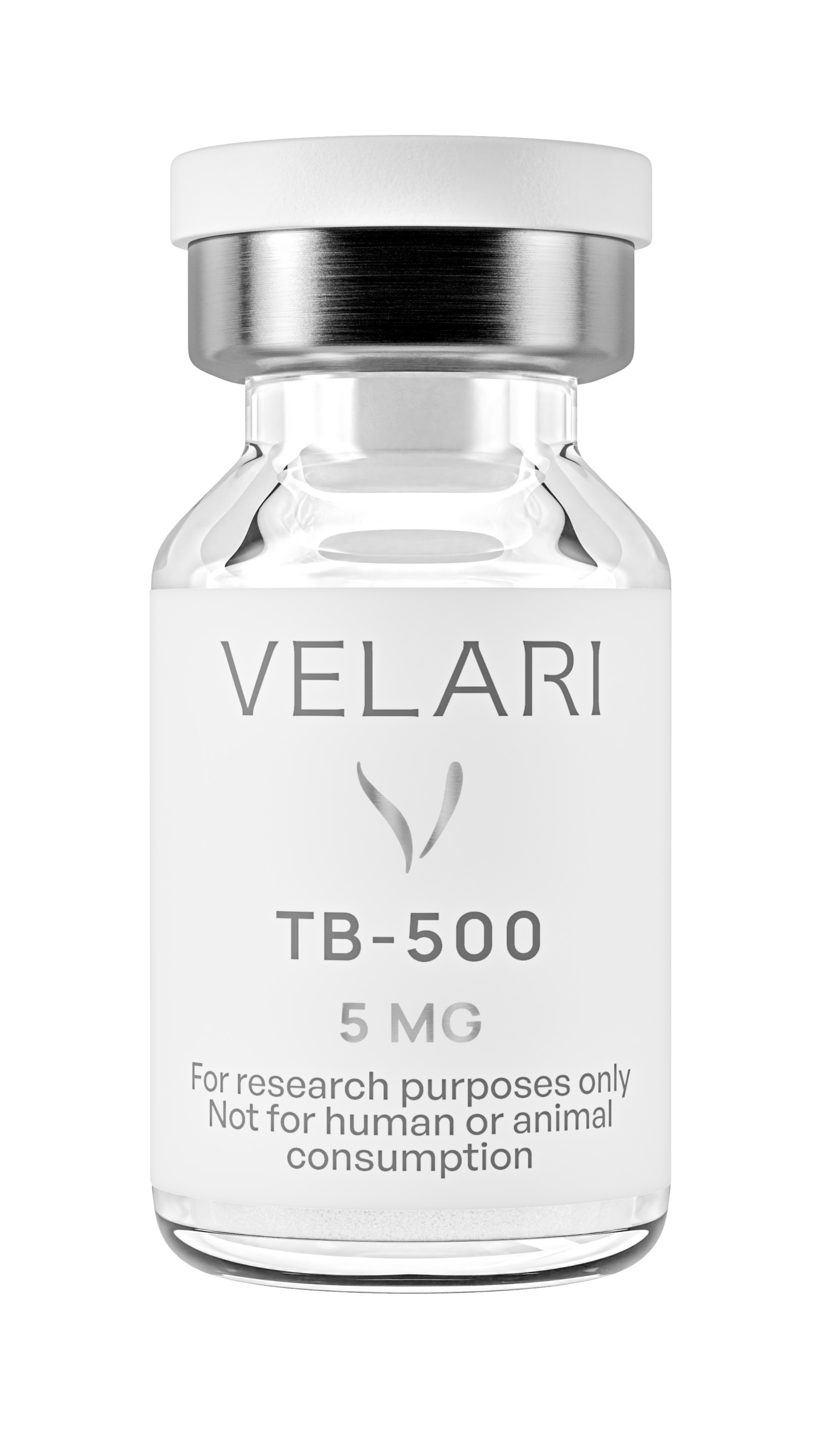
TB-500 is a short synthetic peptide composed of a specific seven-amino-acid sequence (LKKTETQ) derived from thymosin beta-4. It is studied in controlled research settings for its interactions with pathways involved in cell migration, vascular signalling, and tissue repair.
For laboratory research use only. Not intended for human or animal use.

TECHNICAL SPECIFICATIONS
| CAS Number | 885340-08-9 |
| Molecular Formula | C38H68N10O14 |
| Molecular Weight | 889.02 g/mol |
| Amino Acid Sequence | Leu–Lys–Lys–Thr–Glu–Thr–Gln |
| Chemical Class | Polypeptide / Heptapeptide |
| Appearance | White to off-white lyophilized powder |
| Solubility | Soluble in dilute acids and water; insoluble in most organic solvents |
| Storage (Lyophilized) | −20°C; protect from light and moisture |
| Storage (Reconstituted) | 2–8°C |
Frequently Asked Questions
TB-500 is a synthetic version of a short peptide fragment derived from Thymosin Beta-4, a naturally occurring protein identified in mammalian tissue. It is studied for its role in cell migration, angiogenesis (new blood vessel formation), and tissue response in preclinical models.
No. Thymosin Beta-4 is the full-length natural protein (43 amino acids, MW ~4963 Da). TB-500 is a synthetic fragment designed to mimic the most biologically active region.
In laboratory studies, TB-500 is explored for its possible role in tissue response pathways. Research has observed effects on muscle, tendon, and ligament tissue models, inflammation pathways, tissue remodeling, and angiogenic processes at damaged sites. These observations relate only to controlled research settings, not to human use.
Lyophilized powder form: store at −20°C for long-term stability. Reconstituted solution: keep at 2–8°C and use within a short period. Protect from light and moisture.
Current research has examined TB-500 in relation to hair follicle biology in laboratory and animal models only. Observations include influences on cell migration, angiogenesis, and dermal remodeling pathways. These findings are limited to preclinical experimental settings. TB-500 is not approved for any therapeutic use including treatment of hair loss. This product is supplied for laboratory research purposes only.
This product is sold for laboratory research use only under Section 351 of the Public Health Service Act and is not intended for use in humans or animals, or for any diagnostic, therapeutic, cosmetic, or veterinary purpose. By purchasing, you confirm that you are properly trained, licensed (if required), and have the appropriate facilities and equipment to handle research compounds safely and in full compliance with all local, state, and federal laws and regulations. Velari Labs assumes no liability for misuse, improper handling, or unauthorized use, and you affirm that this material will not be introduced into interstate commerce or used in any food, drug, or related consumer products.