
Laboratory Research
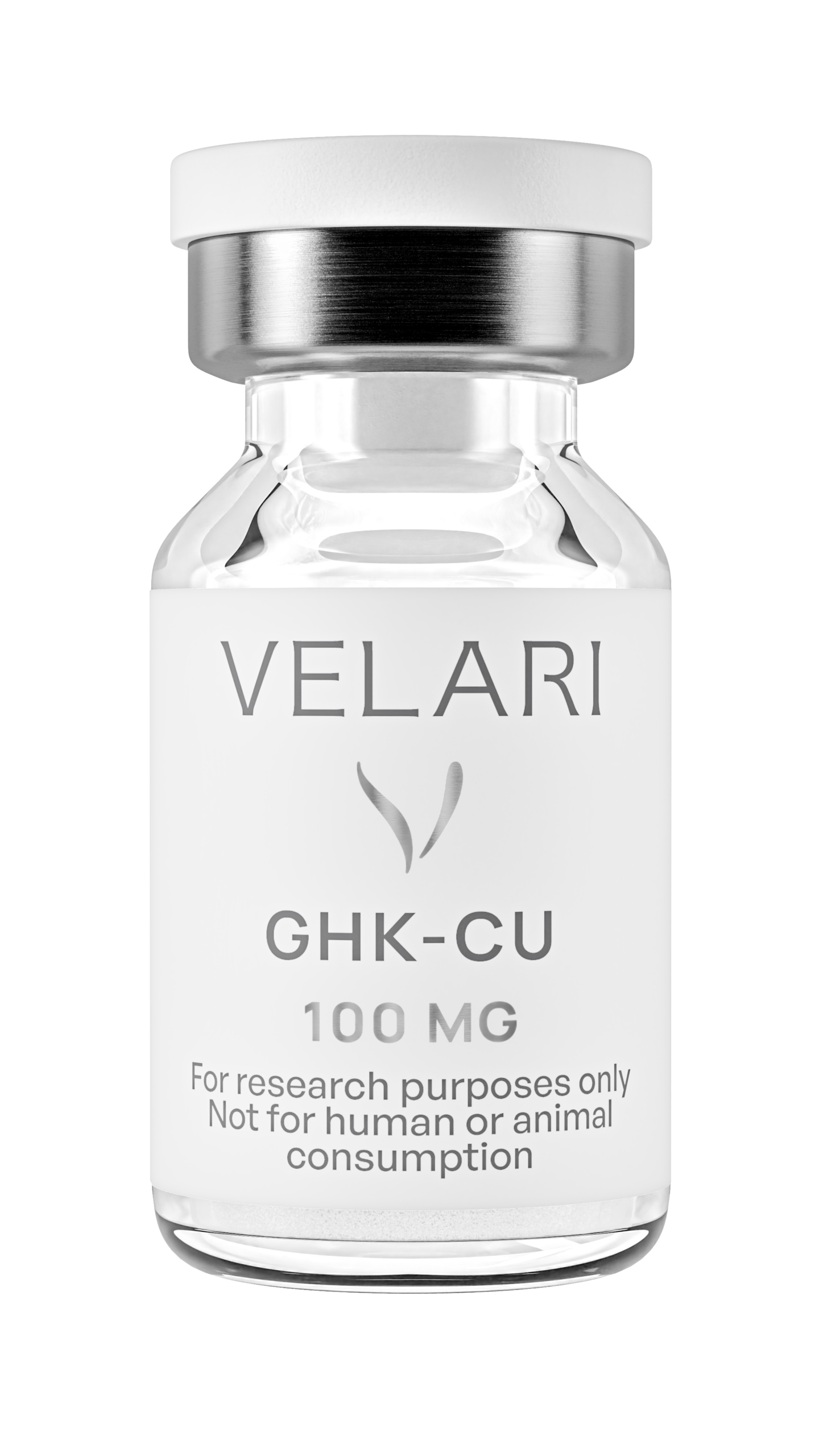
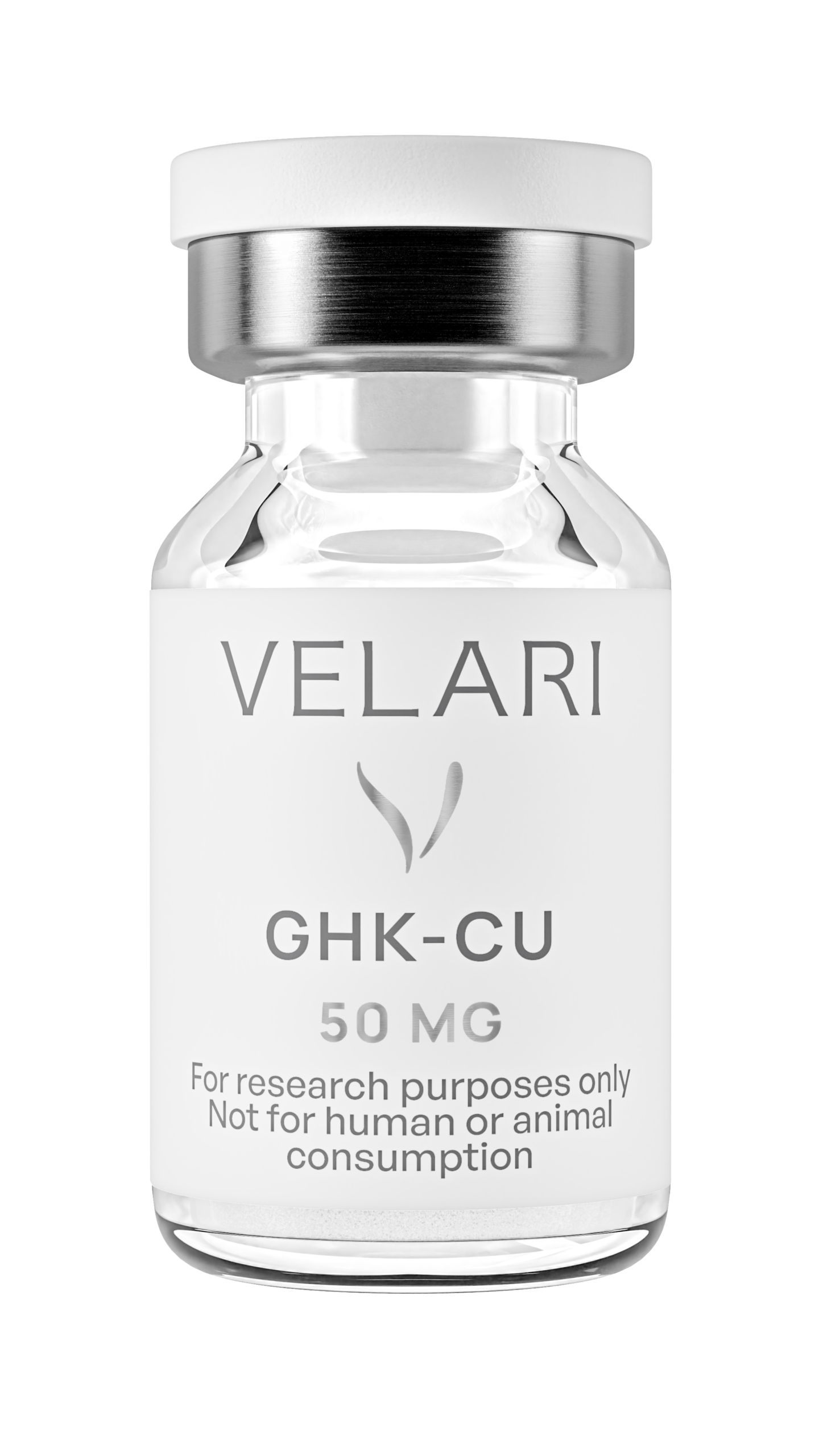
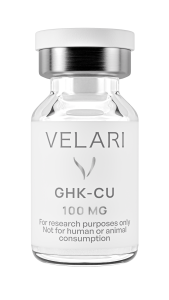
GHK-Cu is a naturally occurring copper-binding peptide widely studied for its possible role in signaling pathways related to repair, balance, and tissue maintenance. Research in lab systems and animal models suggests it may act as a messenger that helps coordinate how cells respond to stress or injury. These observations represent early scientific exploration and are not equivalent to established medical evidence.
Oxidative Stress and Inflammation Pathways
GHK-Cu is explored for how it may interact with processes linked to oxidative stress, including reactions involving iron and reactive oxygen species. A related compound, Pal-GHK, is studied for how it may affect laboratory pathways associated with inflammation, such as NF-κB and MAPK. These observations are derived from in vitro and animal models and have not been validated in clinical trials.

Research on Collagen and Tissue Structure
Researchers often study GHK-Cu to see how it interacts with proteins like collagen and elastin. These proteins help form the structure of biological tissues, so studying this interaction helps scientists better understand how tissue structure and organization work in laboratory models. Findings are limited to preclinical research settings.

Cellular Repair and Tissue Signaling Research
GHK-Cu is studied in skin cell cultures and experimental models to understand how the peptide–copper complex interacts with cells that build and organize tissue, including effects on collagen-related components and structural proteins. In laboratory research it is also examined for signals that guide repair-related cells (like fibroblasts and certain immune cells) and for roles in processes such as small-vessel formation. This summary is for research use only and does not imply human or veterinary application.

REFERENCES
- National Center for Biotechnology Information. (2026). Cu‑GHK (CID 378611) — PubChem Compound Summary. PubChem.
- Aguilar, M.‑I. (2004). Reversed‑phase high‑performance liquid chromatography. In HPLC of Peptides and Proteins (Methods in Molecular Biology). Springer.
- Hureau, C., Eury, H., Guillot, R., Bijani, C., Sayen, S., Solari, P.‑L., Guillon, E., Faller, P., & Dorlet, P. (2011). X‑ray and solution structures of Cu(II) GHK and Cu(II) DAHK complexes: Influence on their redox properties. Chemistry—A European Journal, 17(36), 10151–10160.
Research Context
GHK-Cu is a naturally occurring copper-binding peptide that is widely studied for its possible role in signaling pathways related to repair, balance, and tissue maintenance. Research in lab systems and animal models suggests it may act as a messenger that helps coordinate how cells respond to stress or injury. These observations represent early scientific exploration and are not equivalent to established medical evidence.
For laboratory research use only. Not intended for human or animal use.

TECHNICAL SPECIFICATIONS
| CAS Number | 89030-95-5 |
| Molecular Formula | C14H22CuN6O4 |
| Molecular Weight | 340.38 g/mol |
| Amino Acid Sequence | Gly–His–Lys (glycyl-L-histidyl-L-lysine) |
| Chemical Class | Tripeptide / copper-complexed peptide / polypeptide |
| Appearance | Blue to blue-green lyophilized powder |
| Solubility | Soluble in reconstitution solution |
| Storage (Lyophilized) | −20°C; protect from light and moisture |
| Storage (Reconstituted) | 2–8°C |
Frequently Asked Questions
GHK-Cu is a small copper-binding tripeptide made of Gly-His-Lys. It naturally occurs in several biological fluids and is widely studied in laboratory research for its role in cellular signaling and structural protein regulation.
GHK-Cu is studied in cell cultures, tissue models, and experimental systems to understand interactions with proteins like collagen and elastin, as well as its influence on signaling pathways related to tissue structure, repair, and matrix regulation.
No. All studies and applications described are for research purposes only. It is not intended for human or veterinary use.
GHK-Cu is typically supplied as a lyophilized powder. Researchers reconstitute it under controlled laboratory conditions using reconstitution solution or buffered solutions and store it refrigerated to maintain stability.
Its small size and ability to bind copper ions allow it to interact with cellular pathways and structural proteins in a controlled experimental setting, making it a useful model for studying tissue-related processes and peptide-metal interactions
This product is sold for laboratory research use only under Section 351 of the Public Health Service Act and is not intended for use in humans or animals, or for any diagnostic, therapeutic, cosmetic, or veterinary purpose. By purchasing, you confirm that you are properly trained, licensed (if required), and have the appropriate facilities and equipment to handle research compounds safely and in full compliance with all local, state, and federal laws and regulations. Velari Labs assumes no liability for misuse, improper handling, or unauthorized use, and you affirm that this material will not be introduced into interstate commerce or used in any food, drug, or related consumer products.