
Laboratory Research
In preclinical studies, Velatrutide has been observed to interact with all three target receptors: GLP‑1, GIP, and glucagon.
GIP Receptor
Research shows that this receptor pathway has been studied in preclinical models for its role in insulin signaling when glucose levels are elevated. Researchers have also explored its potential involvement in maintaining pancreatic cell function and lipid metabolism in laboratory settings.
Overall, activation of all three receptors in preclinical research models has been observed to influence energy balance signaling, glucose metabolism, and lipid pathway activity. These observations have been documented in published peer-reviewed literature and are summarized in the references below.

GLP-1 Receptor
In laboratory studies, activation of this receptor pathway by Velatrutide has been associated with altered appetite signaling and gastric motility in preclinical models. Published literature has also documented observations related to glucose-dependent insulin release from pancreatic cells in controlled research environments.
Overall, activation of all three receptors in preclinical research models has been observed to influence energy balance signaling, glucose metabolism, and lipid pathway activity. These observations have been documented in published peer-reviewed literature and are summarized in the references below.

Glucagon Receptor
Activation of the glucagon receptor pathway has been studied in preclinical models for its role in hepatic glucose output and lipid mobilization. When examined alongside other metabolic receptor pathways, researchers have observed interactions between insulin signaling and glucose utilization in controlled laboratory settings.
Overall, activation of all three receptors in preclinical research models has been observed to influence energy balance signaling, glucose metabolism, and lipid pathway activity. These observations have been documented in published peer-reviewed literature and are summarized in the references below.

REFERENCES
- National Center for Biotechnology Information. (2026). Retatrutide (PubChem Compound Summary; CID 171390338). PubChem.
- 400Canlab International. (n.d.). Peptide reconstitution and storage (general aseptic handling guidance).
- Harvard Apparatus / Grace Vydac. (2002). The handbook of analysis and purification of peptides and proteins by reversed‑phase HPLC [PDF]. 34(9), 1234–1247.e9.
Research Context
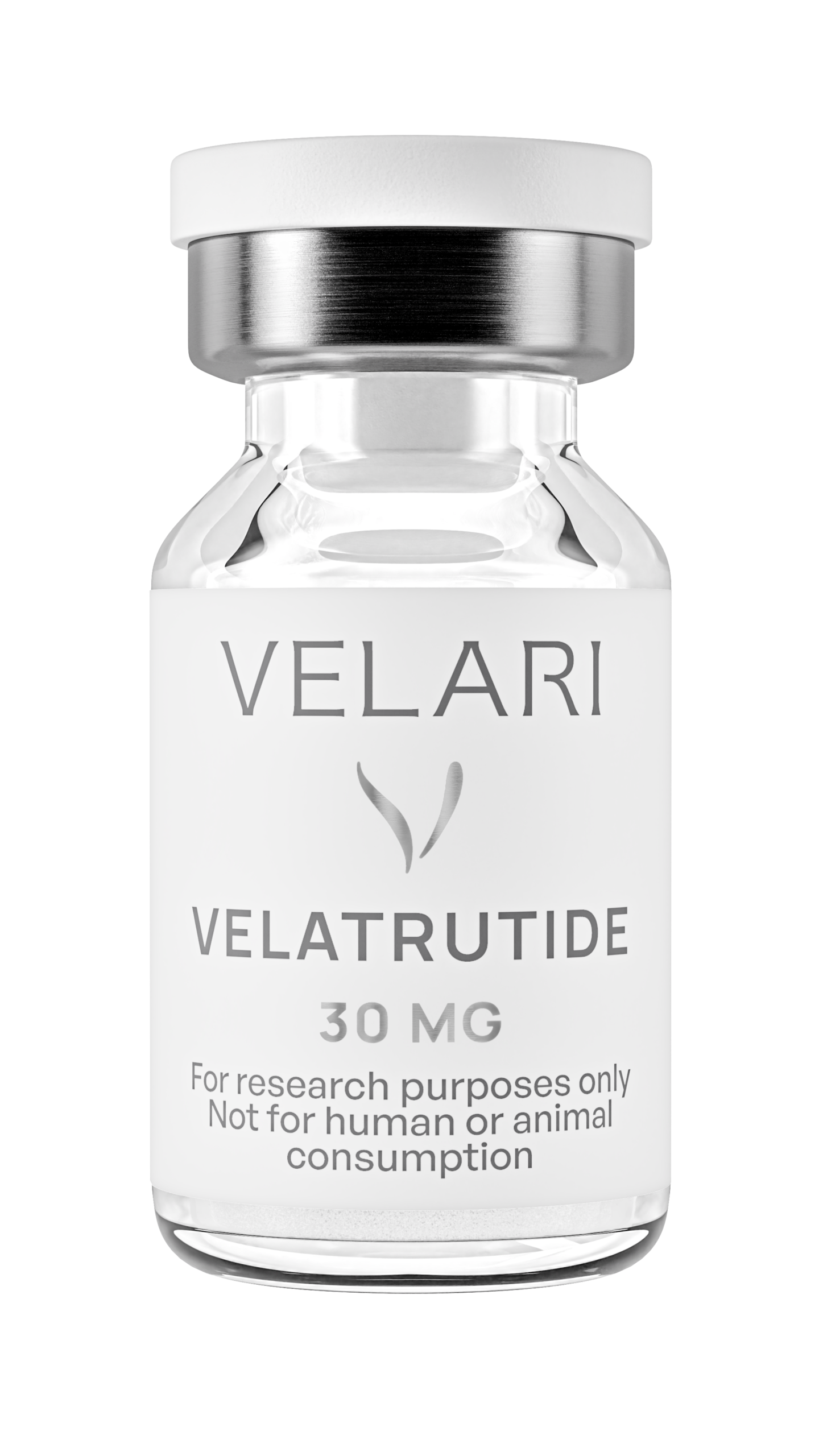
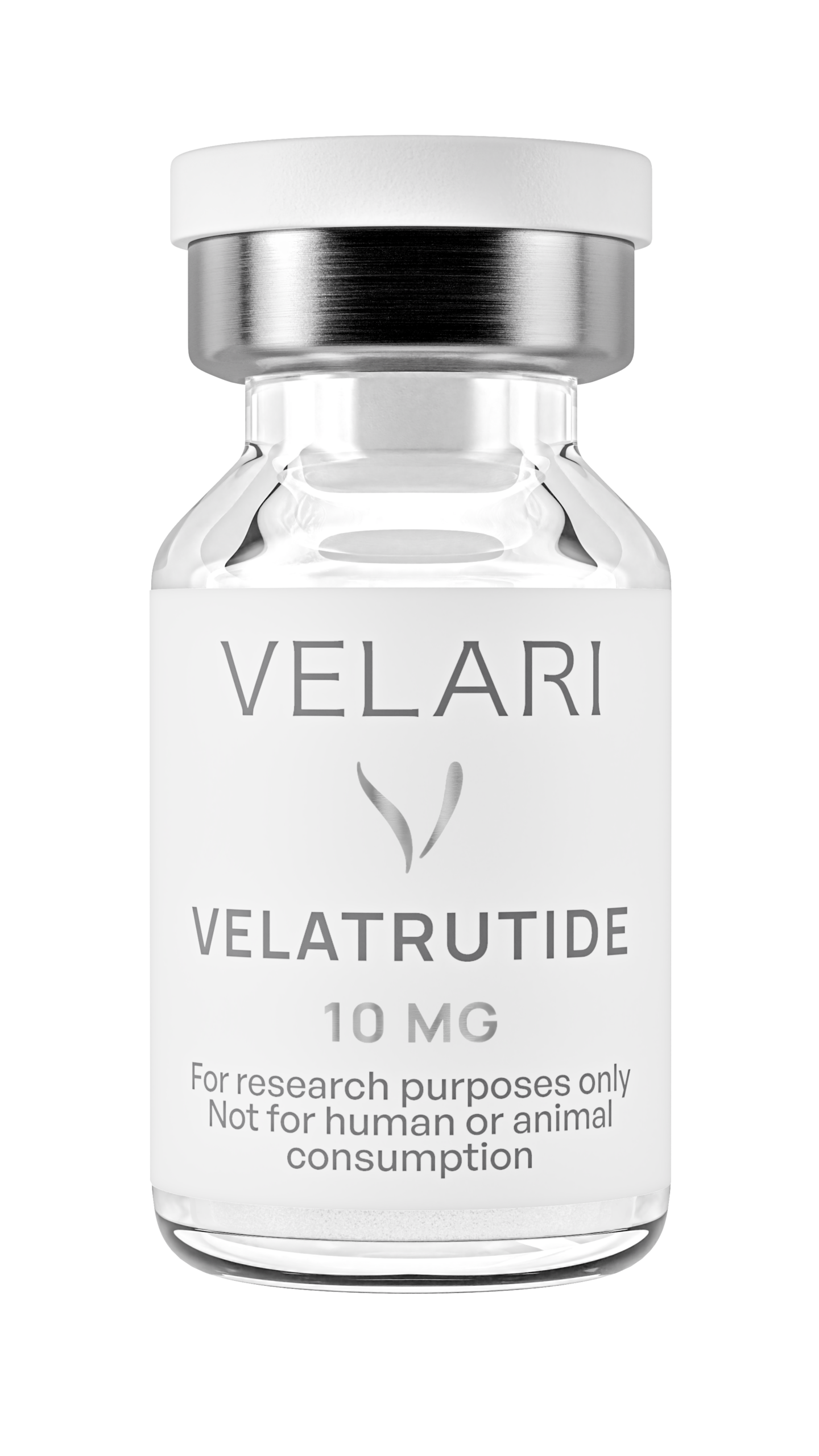
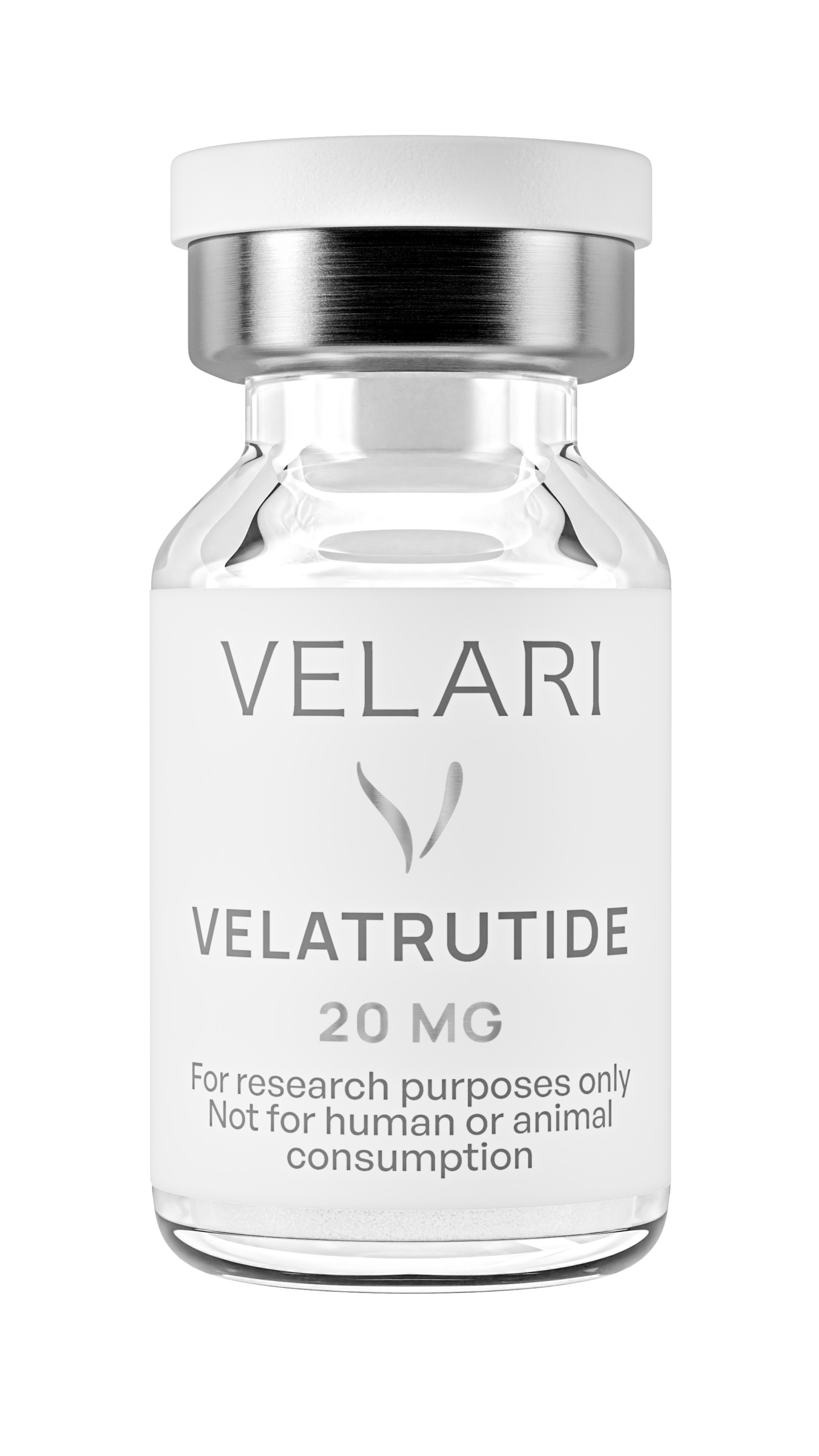
Velatrutide is a laboratory-synthesized peptide studied for its interactions with naturally occurring hormone pathways in the body. In published literature, it is described as a triple-acting incretin compound, interacting with three key hormone receptor pathways — GLP‑1, GIP, and glucagon — in preclinical research models examining metabolic signaling mechanisms.
For laboratory research use only. Not intended for human or animal use.

TECHNICAL SPECIFICATIONS
| CAS Number | 2381089-83-2 |
| Molecular Formula | C221H342N46O68 |
| Molecular Weight | 4,731.34 g/mol |
| Amino Acid Sequence | Tyr-Aib-Glu-Gly-Thr-Phe-Thr-Ser-Asp-Tyr-Ser-Ile-Aib-Leu-Asp-Lys-Ile-Ala-Gln-Gln-Ala-Phe-Val-Gln-Trp-Leu-Ile-Ala-Gly-Gly-Pro-Ser-Ser-Gly-Ala-Pro-Pro-Pro-Ser-Lys-NH2 |
| Chemical Class | Polypeptide (triple-incretin receptor agonist) |
| Solubility | Soluble in water and DMSO; soluble in aqueous saline solutions (0.9% NaCl) |
| Storage (Lyophilized) | ≤ −20°C to −80°C |
| Storage (Reconstituted) | 2–8°C |
Frequently Asked Questions
Velatrutide has been investigated in preclinical and clinical research settings as a triple-acting incretin compound. Published studies have examined its interactions with GLP‑1, GIP, and glucagon receptor pathways in controlled laboratory and trial environments. All referenced studies are available in the peer-reviewed literature cited below.
Velatrutide is classified as a triple-receptor agonist, meaning it interacts with three distinct hormone receptor pathways (GLP‑1, GIP, and glucagon) in research models. This distinguishes it from dual-agonist and single-agonist compounds that have been studied in similar preclinical contexts. Researchers have explored these pathways to understand metabolic signaling mechanisms.
Velatrutide has been the subject of multiple published preclinical and clinical research studies. Peer-reviewed literature describes investigations into its receptor-binding profile and metabolic pathway interactions. This product is provided exclusively as a research chemical and is not an FDA-approved drug.
In laboratory and preclinical settings, researchers have explored Velatrutide’s interactions with metabolic signaling pathways, including those involved in glucose regulation, lipid metabolism, and energy homeostasis. Its triple-receptor profile has made it a subject of interest across multiple areas of metabolic research.
Velatrutide should be handled in accordance with standard laboratory safety protocols. Store lyophilized powder at ≤ −20°C and reconstituted solutions at 2–8°C. Use appropriate PPE (gloves, lab coat, protective eyewear) and follow institutional biosafety and disposal procedures. Refer to the Certificate of Analysis for batch-specific information.
This product is sold for laboratory research use only under Section 351 of the Public Health Service Act and is not intended for use in humans or animals, or for any diagnostic, therapeutic, cosmetic, or veterinary purpose. By purchasing, you confirm that you are properly trained, licensed (if required), and have the appropriate facilities and equipment to handle research compounds safely and in full compliance with all local, state, and federal laws and regulations. Velari Labs assumes no liability for misuse, improper handling, or unauthorized use, and you affirm that this material will not be introduced into interstate commerce or used in any food, drug, or related consumer products.